Meet the author
Preston’s author visits connect storytelling, creative expression and the possibility of becoming an author yourself.
STORIES & POSSIBILITY BOOKS &
More than a game.
A whole world of possibility.
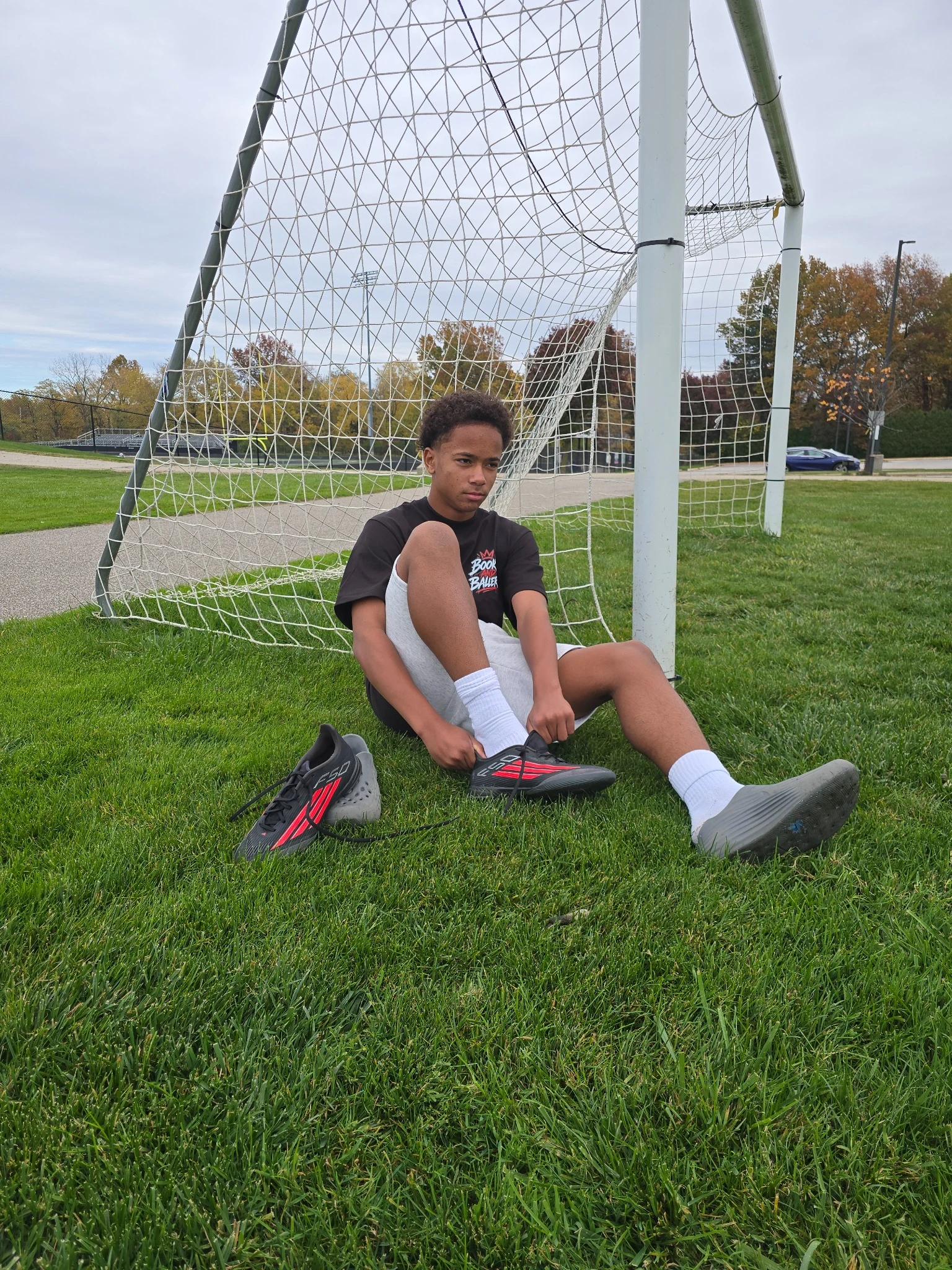
Books & Ballers is a 501(c)(3) nonprofit founded by young author, soccer player and wrestler Preston Lincoln. We bring reading, leadership and community together. Preston published From Pages to Pavements at age 10. His story is a reminder that young people have something to say right now. On the soccer field, on the wrestling mat and on the page, Preston brings his whole self to what he does.
With Dr. Domonique “Dr. Dom” Revere, we’re creating space for boys to strengthen their minds, practice communication and see themselves as more than what they can do on a field or mat.
Reading opens the door.
What happens next matters, too.
Preston’s author visits connect storytelling, creative expression and the possibility of becoming an author yourself.
STORIES & POSSIBILITYA confidence and conversation experience for middle school boys, with space for reflection, healthy habits and connection.
CONFIDENCE & COMMUNICATIONThrough Bloom with a Book and community care initiatives, we connect books, service and a sense of responsibility to one another.
LITERACY & SERVICEProgram overview. Dates, locations and participation details will be shared as offerings are scheduled.
More room to grow.
More courage to be heard.
We’re planning the Level Up Summit for spring 2027, creating space for young people to explore confidence, communication, leadership and possibility.
Rooted in our belief that strong minds and clear voices matter, the summit will bring the Books & Ballers mission into a shared experience.
Planning is underway. Registration is not yet open.
A place for words, questions and big ideas. Free resources for readers and the people in their corner.
NO SIGN-UP. JUST POSSIBILITY.A reader can discuss big ideas and still need help decoding words. Choose by the skill you want to practice. Keep topics age-respectful and interests at the center.
Choose a skill to practice. These paths overlap, and readers can use more than one.
A grown-up guided practice for readers working on short-a words. Use after these letter sounds have been taught. Choose topics and presentation that respect the reader’s age.
Start with listening and conversation. Reading these words independently is optional. A grown-up can read every word aloud.
For readers ready to explain ideas and relationships. These are conversation and meaning goals, not grade labels or decoding levels.
A short original story for supported rereading. Choose this when the reader can read most words accurately, with help for unfamiliar ones. This is not a decodable or leveled text.
Use with a picture book, chapter, comic or nonfiction selection. Listen, speak, draw or write your responses. Select two or three questions per sitting.
An original discussion passage about leadership and community. Read independently or listen to a grown-up. No assigned grade or measured text level.
A flexible record of reading, listening and discovery. Progress is also a new question, a stronger explanation or the courage to read again.
An adaptable routine for home, mentorship or a small group. Short, steady practice can fit alongside sports and everyday life.
Stories where Black and Brown children belong, imagine, question and grow. Start with interest. Make room for choice.
Picture books and an illustrated early chapter book for reading together, talking and growing confidence.
A Black boy celebrates his imagination, strengths and possibilities.
What is one good thing about you that you want the world to know?
Jabari prepares for a big leap from the diving board, with his dad nearby.
What helps you feel ready to try something new?
Meet Juana, her dog Lucas and her everyday adventures in Bogotá. A shared read can support the move into chapters.
Which part of Juana’s world feels familiar, and what would you ask her about?
These are curated browsing suggestions, not measured reading levels or required assignments. Grade bands are flexible. Try read-alouds, shared reading or audiobooks for access to ideas, and use targeted texts for word-reading practice. Ask your library about print, audio and accessible editions. Book details link to publishers or authors; links are not affiliated.
Find books that reflect the reader’s life and open windows into someone else’s. Look for joy, adventure, science, sport, family and imagination, too.
These original starter materials offer practice and conversation. They are not a placement test, a complete curriculum or a substitute for individualized instruction. No resource has an assigned Lexile or measured reading level. A grown-up can read a text aloud to support vocabulary and comprehension while a reader practices word reading separately.
The structure draws on IES guidance distinguishing language, sound–letter connections, decoding and connected-text practice. The activities themselves have not been independently evaluated. For persistent reading difficulties, work with a teacher or qualified reading specialist to identify the support a reader needs.
Book lists may use age or grade bands. Use those as browsing aids alongside interests, maturity, accessibility and the purpose of reading. Resource links are provided for exploration; no affiliation is implied.
Black and Brown boys deserve strong instruction, books that reflect their lives and people who believe in their voices. The numbers help us see the need. They do not define a child’s potential.
National estimates for male students, by reported race/ethnicity. Rounded to whole percentages.
| Grade | Black boys | Hispanic boys |
|---|---|---|
| Grade 4 | 14% | 18% |
| Grade 8 | 13% | 17% |
NAEP Proficient is an assessment achievement standard. It does not mean “at grade level,” and scoring below it does not mean a child cannot read. These figures describe groups, not individual readers.
How NAEP reports reading“Brown” is a community term, not a single NAEP reporting category. Hispanic male results are one relevant group and do not represent every Brown boy. The table uses the source’s Black, Hispanic and male categories.
Our response: meaningful books, explicit skill practice, conversation and consistent support. Every reader deserves room to grow.
Data checked November 11, 2026. NAEP is a sample-based national assessment; these figures are estimates, not a measure of Books & Ballers participants or local school outcomes.
Books in hand. Ideas in motion. Possibility on the field.
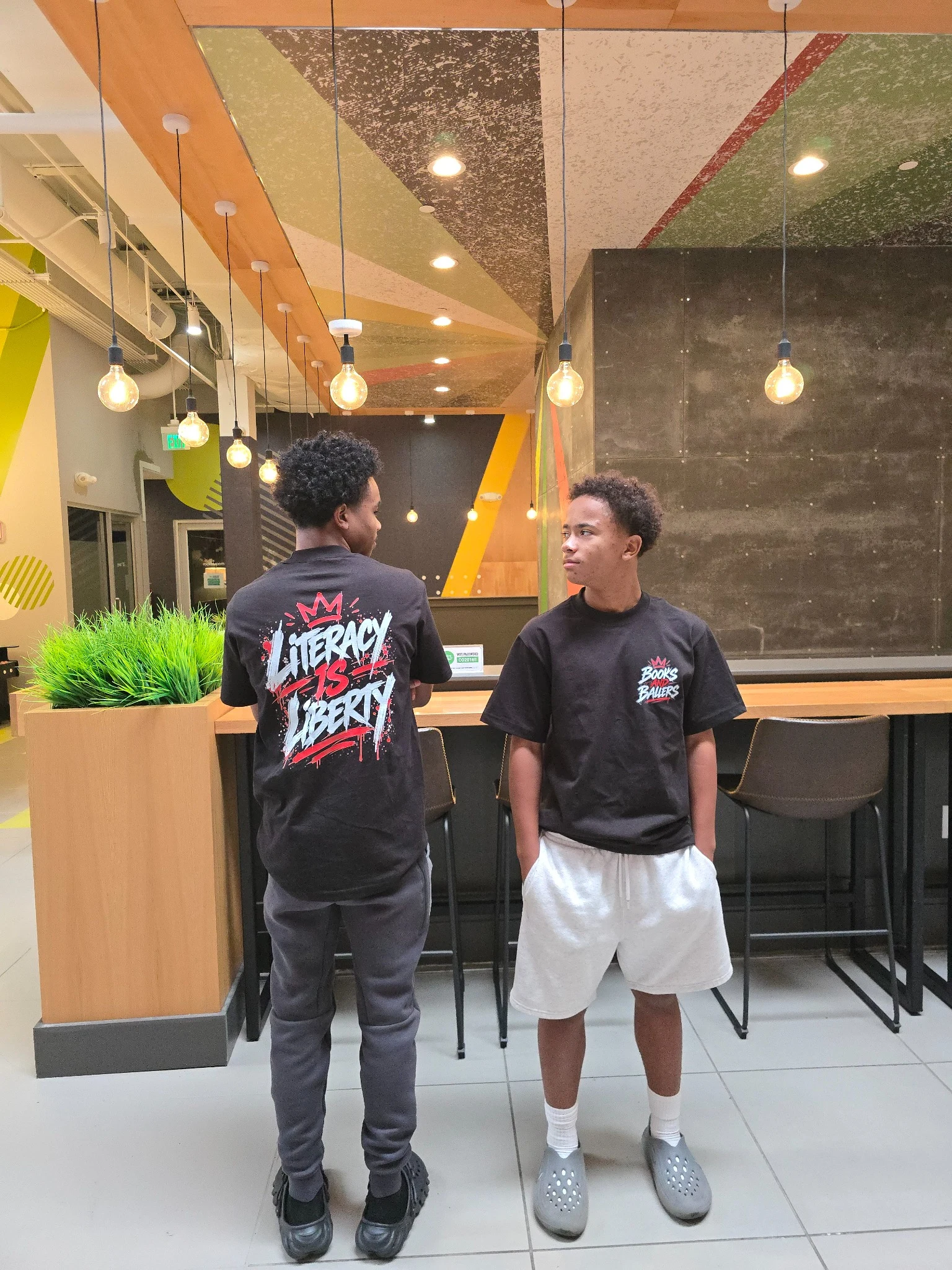
Our Literacy Is Liberty campaign brings the message into everyday life, from the library to the soccer field.
Photographs from the Books & Ballers Literacy Is Liberty campaign.
The black Books & Ballers tee features a front chest logo and the bold red and white “Literacy Is Liberty” artwork on the back.
A message with something to say. The original campaign shirt, shown here in our campaign photographs.
Pricing, sizes and shipping details will be posted when online ordering opens.
For program and partnership information:
info@booksandballers.net